
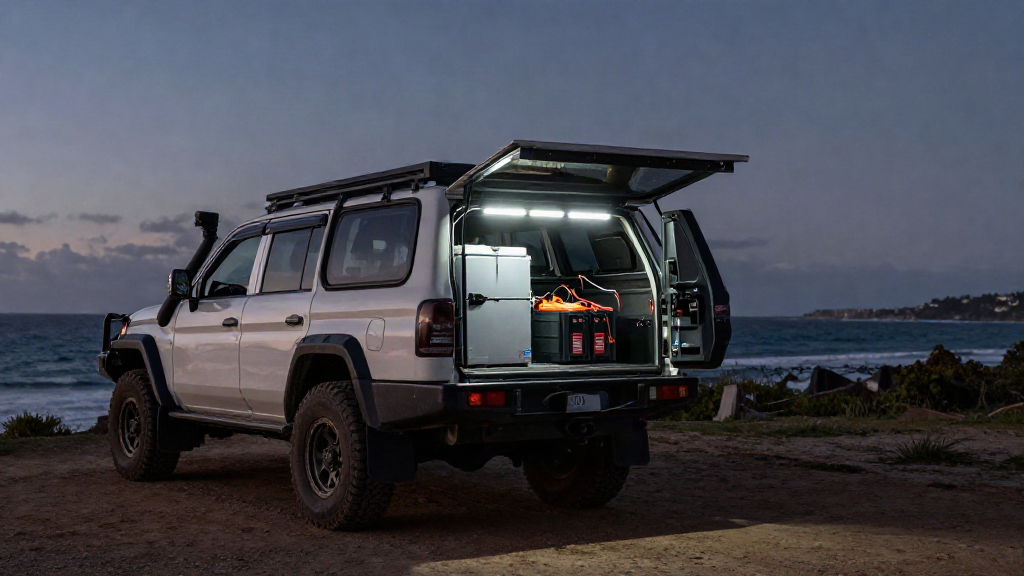
A dual battery setup is the upgrade that turns a capable 4WD into a genuine off-grid tourer. It lets you run a fridge, camp lights and 12V accessories for days without ever risking the battery you need to start the engine. Done properly, it is one of the most useful and safest additions you can make to a Brisbane 4WD – but it has to be installed correctly.
At Celtic Car Sound we fit mobile dual battery systems for Brisbane drivers, from daily commuters to families and highway travellers heading north each winter. Here is what a dual battery setup for 4WD touring actually involves, when it is worth the investment, and how to make sure yours is wired safely.
What a Dual Battery Setup Actually Does
Every vehicle has a starter battery – the one that cranks the engine and runs your lights and dash. It is built for short bursts of power, not for slowly draining a fridge overnight. A dual battery system adds a second, deep-cycle battery dedicated to your accessories, while keeping the starter battery isolated and fully charged for the one job that matters most.
The two batteries work together while you drive, so the auxiliary battery charges from your alternator, then they separate automatically when you stop. The result is simple: your fridge keeps running, your camp lights stay on, and your 4WD still starts every morning.
When You Actually Need a Dual Battery System
Not every 4WD needs a second battery. You will get real value from a dual battery setup when:
- You run a fridge for more than a day or two away from power
- You power camp lights, an inverter, a coffee machine or a portable shower
- You charge phones, tablets, drones and a UHF radio without draining the starter battery
- You are planning extended outback, beach or coastal touring
If your driving is mostly short city trips and you only ever charge a phone from a USB socket, a second battery may be more than you need. But the moment your plans involve stopping overnight without mains power, a properly installed auxiliary battery quickly pays for itself in convenience and peace of mind.
Isolators, Cabling and Fusing Done Safely
The heart of any dual battery system is the way the two batteries are managed. That is the isolator’s job: it links both batteries while you drive so the auxiliary charges, then disconnects them so your accessories can never flatten your starter battery. Choosing the right gear and wiring it safely is where a professional install makes all the difference.
Choosing the Right Isolator
There are two main approaches. A voltage-sensing relay isolator is simple, reliable and ideal for most touring setups – it automatically connects the batteries when the engine is running and separates them when it is not. A DC-DC charger suits vehicles with smart or variable-voltage alternators, and gives you a controlled, stable charge for modern deep-cycle and lithium batteries. The right choice depends on your vehicle, your battery chemistry and how you tour, so it is worth talking it through rather than guessing.
Cabling and Fusing
Cable size, length and fusing are not details to rush. Undersized cable overheats, drops voltage and can leave your auxiliary battery chronically undercharged; the wrong fuse can leave a fault unprotected. Correct gauge cable, proper crimped terminations and fusing at both ends protect your vehicle and your gear. Run poorly – through sharp panels or across hot surfaces – and a 12V system becomes a genuine safety risk. This is exactly the kind of workmanship our installers are known for.
Running Fridges, Lights and Accessories
Once the auxiliary battery is in place and charged reliably, your accessories become genuinely usable off grid. A 12V fridge can run continuously on a multi-day trip, camp lights and USB outlets work whenever you need them, and an inverter lets you run small 240V devices away from power. We also integrate solar so a portable or roof-mounted panel keeps the system topped up while you are parked up.
Because everything ties into one managed system, your 12V accessories, solar charging and vehicle wiring all work together rather than fighting each other. Fridges, lights, UHF radios and dash cams can all share the auxiliary supply without touching your starting battery.
Why Professional Installation Pays Off
A dual battery setup sits at the intersection of your vehicle’s charging system, its electrical safety and the gear inside it. Installing it correctly means matching the isolator or DC-DC charger to your alternator, sizing cable for the current and distance involved, fusing every circuit and securing every connection so it survives corrugations, heat and dust.
That is why Brisbane drivers choose Celtic Car Sound. We use quality, warranty-backed components, and we come to you – mobile installation at your home or office, so there is no need to drop the vehicle off or lose a day. Every job is backed by our workmanship guarantee, and we are happy to explain exactly what we have fitted and why.
Book Your Dual Battery Setup in Brisbane
If you are planning a touring setup and want reliable 12V power you can trust, a properly installed dual battery system is the answer. Whether you need an isolator, a DC-DC charger, fresh cabling, solar integration or a full fridge-and-accessories fit-out, our team can design a setup around how you actually travel.
Contact Celtic Car Sound for a no obligation quote. We install car audio, auto electrical and 12V systems across Brisbane, and we will happily talk through the right dual battery setup for your 4WD – no pressure, no jargon, just professional advice from a technician you can trust with your vehicle.
No responses yet